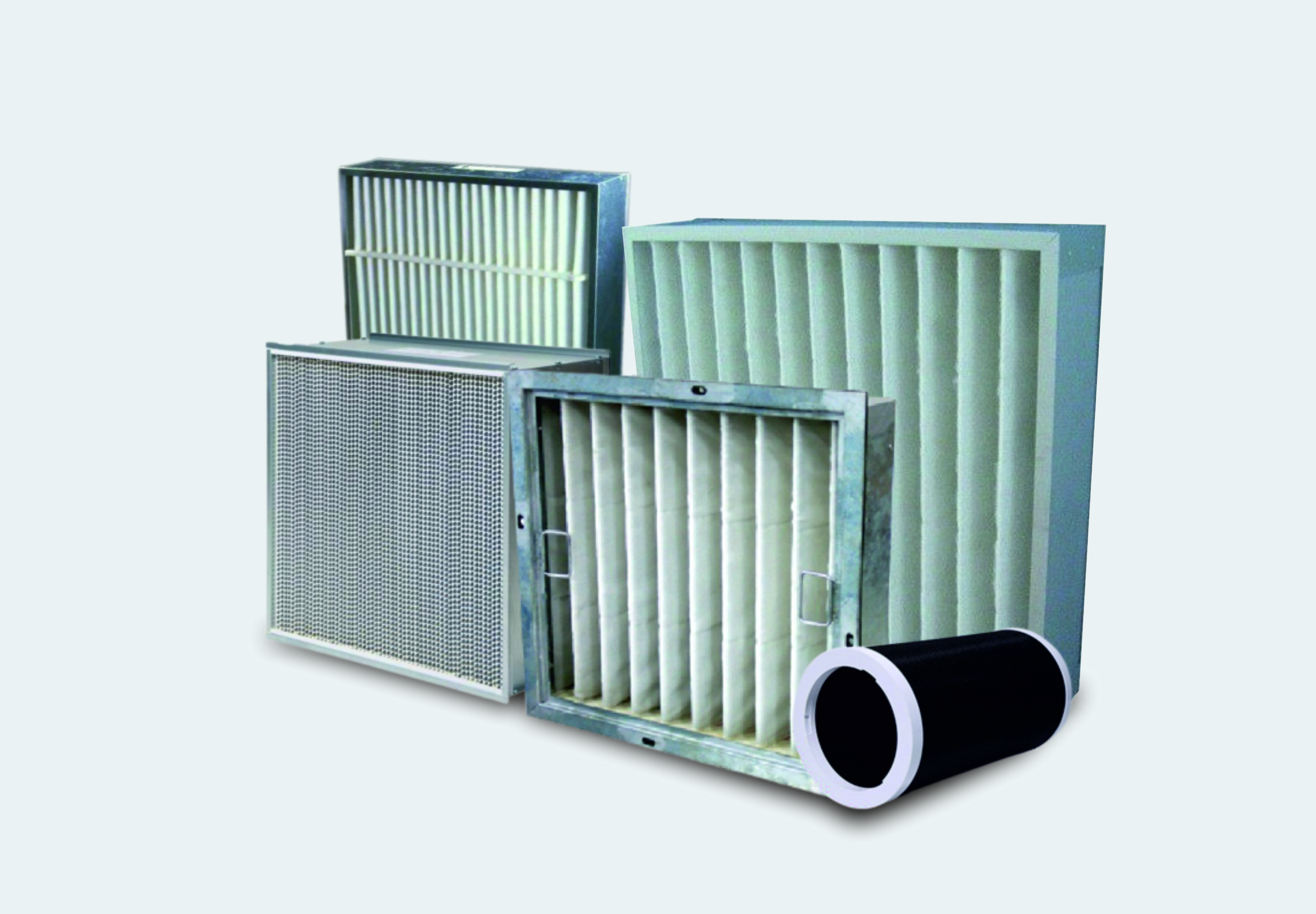
AIR FILTER – TECHNICAL SPECIFICATIONS
1. FILTER TYPE - Available in Pre Filters, Fine Filters, HEPA Filters, Panel Filters, and Carbon Filters to meet different air filtration and purification requirements.
2. FILTER MEDIA - Manufactured using high-quality Synthetic Fibre, Glass Fibre, Non-Woven Fabric, or Microglass Media for effective particle capture and reliable filtration performance.
3. FRAME MATERIAL - Available with GI, Aluminium, Stainless Steel, or Plastic frames to provide structural strength, durability, and compatibility with different HVAC applications.
4. FILTRATION EFFICIENCY - Designed with different filtration grades to capture airborne contaminants ranging from larger dust particles to fine particulate matter, depending on the selected filter type.
5. AIRFLOW CAPACITY - Engineered to handle the required air volume while maintaining suitable filtration performance and supporting efficient operation in HVAC and ventilation systems.
6. PRESSURE DROP - Available in different resistance configurations to suit system requirements, helping maintain an appropriate balance between filtration efficiency and energy consumption.
7. OPERATING TEMPERATURE - Suitable operating temperature ranges depend on the filter media, frame material, and application-specific environmental conditions.
8. DUST HOLDING CAPACITY - Designed to retain accumulated dust and airborne particles, with capacity varying according to filter media, construction, and operating conditions.
9. INSTALLATION TYPE - Suitable for installation in Air Handling Units (AHUs), HVAC duct systems, ventilation equipment, cleanroom systems, and industrial air filtration units.
10. MAINTENANCE - Available in washable, reusable, or replaceable designs, depending on the filter construction, helping simplify servicing and maintain consistent filtration performance.
11. APPLICATIONS - Widely used in commercial buildings, hospitals, pharmaceutical facilities, laboratories, cleanrooms, manufacturing plants, and industrial ventilation systems.
12. CUSTOMIZATION - Available in different dimensions, thicknesses, frame designs, and filtration grades to meet specific equipment requirements and project specifications.
13. CARBON FILTRATION - Carbon Filters use activated carbon media to adsorb many unwanted odours and certain gaseous contaminants, making them suitable for applications requiring improved air quality.
14. HIGH-EFFICIENCY FILTRATION - HEPA Filters are designed to capture at least 99.97% of particles measuring 0.3 microns when tested to the applicable HEPA standard, subject to the filter's certified performance.
15. PRE-FILTRATION - Pre Filters capture larger airborne particles such as dust, lint, and debris, helping protect downstream fine filters and extend their service life.
AIR FILTER – DESCRIPTION
An Air Filter is an essential component of HVAC and ventilation systems designed to remove dust, dirt, pollen, and other airborne contaminants, ensuring clean and healthy air circulation. It helps improve indoor air quality, protects HVAC equipment from dust accumulation, and enhances the overall efficiency and performance of air handling systems.
Different types of air filters are available to meet specific filtration requirements, including Pre Filters, HEPA Filters, and Carbon Filters. Pre Filters capture larger dust particles and protect subsequent filtration stages, while HEPA Filters remove very fine airborne particles with high filtration efficiency. Carbon Filters help reduce unwanted odours, gases, and certain airborne chemical contaminants through adsorption.
Air filters are manufactured using different filter media, frame materials, sizes, and filtration grades to suit various applications. They are widely used in commercial buildings, hospitals, pharmaceutical industries, cleanrooms, manufacturing facilities, and industrial ventilation systems. Selecting the right combination of filters helps maintain better air quality, improve system reliability, and support efficient HVAC operation.